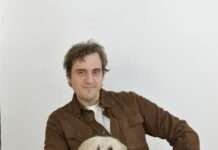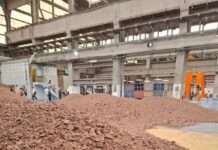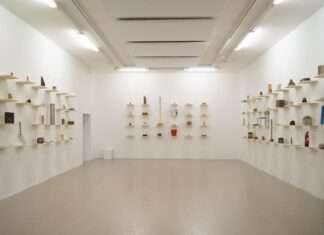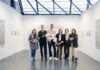
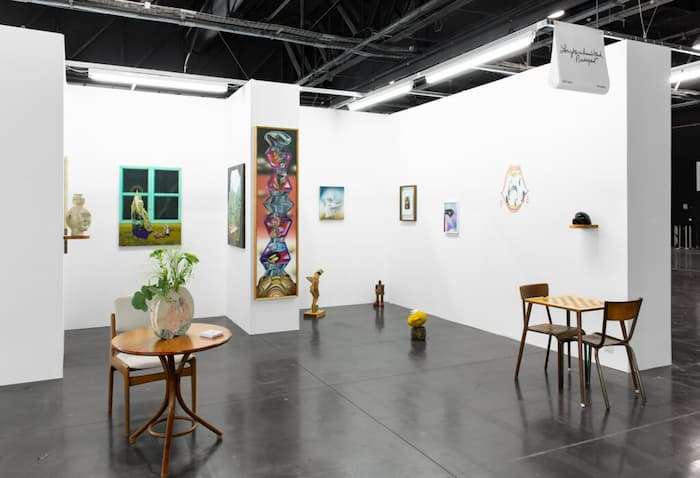
Art-o-rama 2025, Longtermhandstand, Budapest © Margot Montigny
On the occasion of the opening sequence of the Mediterranean Season in Marseille, I met with an emblematic figure, a natural ambassador of the Mediterranean region and a builder of the hospitality and excellence that define a territory looking confidently toward the future : Jérôme Pantalacci.
Through the project On the Ruins, Stones Bloom تزهر حجارة الأطلال by artist-researcher Abdessamad El Montassir, developed in partnership with the Kulte Art Center in Rabat and the CIRVA in Marseille, as well as through the residency program of Friche la Belle de Mai, FRÆME embodies long-term relationships built with artists. As Jérôme Pantalacci, its director, explained to me, these connections reflect the season’s subtitle: “arrive, depart, return.”
The Sahara, carrying both imaginaries and traditions, becomes an ecosystem where different forms of life can coexist through a plurality of images and sounds. Abdessamad El Montassir, who expanded his practice to include glassmaking following his residency at the Villa Medici, unveils a new chapter of this exploration.
In addition, Art-o-rama celebrates its 20th anniversary this year. Jérôme reflected on what initially seemed like a bold gamble: creating a fair far from the Parisian capital, centered on emergence and experimentation. Over the past two decades, it has helped place Marseille and its region at the heart of the international contemporary art scene, a dynamic further strengthened by the creation of the Plein Sud network.
He spoke about what defines the fair’s DNA and its unique identity : both deeply rooted in its local context and firmly connected to the international art world. This year’s edition brings together 39 galleries from 18 countries, including 19 first-time exhibitors; more than half of the participating galleries are less than five years old, and a significant number of presentations are conceived as duos, all while maintaining a strong curatorial commitment.
Among the highlights of this 20th edition, whose official celebrations will culminate in 2027, are the Région Sud Awards, a contemporary design component within the Edition section, numerous partnerships and satellite events through an extensive VIP programme, all set against the backdrop of the Mediterranean scene. This theme will be explored through a series of talks and encounters, and is reflected in the origins of several participating exhibitors.
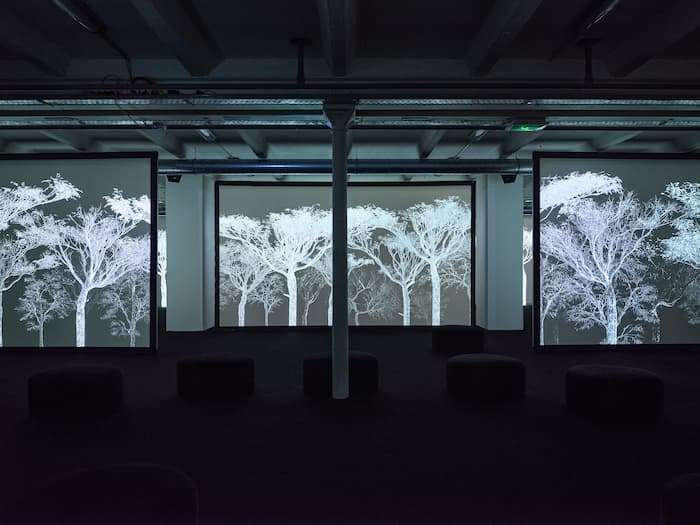
Exhibition views of “On the ruins, the stones bloom”, presented by Fræme in partnership with Cirva, at the Friche la Belle de Mai, 2026 © Abdessamad El Montassir / ADAGP.
Photo credit: Grégoire d’Ablon
The exhibition On the Ruins, Stones Bloom reflects a shared journey with the artist spanning ten years. In what way is this kind of commitment at the heart of FRÆME’s mission?
Artistic adventures are also—and perhaps above all—human adventures. Through the various activities carried out by FRÆME, we meet and collaborate with many artists, and we always strive to develop further projects with them. It is important to sustain these relationships and to remain attentive to artists’ needs, aspirations, and evolving practices.
A good example is Moye·Cassandra Naigre, who was the invited artist at Art-o-rama in 2025. Together, we also led an arts education project for the City of Marseille in a kindergarten classroom throughout the school year.
As for Abdessamad, he was the second artist welcomed to La Friche as part of the Mediterranean Residencies programme, which we continue to run today. This residency played an important role in the development of his practice, and we have remained closely connected ever since. Abdessamad has retained a strong attachment to both the city and La Friche. The residency enabled him to build lasting ties with Marseille. He later undertook a residency at IMÉRA and subsequently benefited from the City’s studio programme.
We began discussing an exhibition project in early 2024. When the Mediterranean Season was announced, it immediately felt like the perfect framework. Together, we decided to become part of that momentum. The season’s subtitle, “arrive, depart, return,” perfectly captures the relationship we have with Abdessamad—as with many artists—a relationship shaped by encounters, departures, and reunions.
What is it about Abdessamad El Montassir’s universe that resonates with you?
The exhibition On the Ruins, Stones Bloom, which we are currently presenting, speaks of a territory that remains largely unknown to me, as it does to many people: the Sahara. The desert and all that composes it; those who inhabit it, both human and non-human, living and non-living.
Abdessamad approaches this territory and its stories—history with both a small and a capital “H”—with great poetry and subtlety. Each work in the exhibition possesses its own distinct presence, yet every piece interacts with the others in a symbiotic relationship. The exhibition immerses us, symbolically, in these landscapes, inviting us to move through them, to pause within them, and to experience them attentively.
Some of the works were co-produced with CIRVA, a key institution for artists in Marseille and beyond. What additional dimension does this laboratory bring to the exhibition?
Abdessamad had wanted for some time to create works in glass. He began developing this project in Rome during his residency at the Villa Medici.
Glass is made from sand. The Sahara is sand. Among the Sahrawi people, there is an ancient, almost archaic tradition of making beads from glass paste. This practice became the starting point for the work we are presenting: a series of ten blown-glass sculptures produced this winter at CIRVA.
It was Abdessamad’s first experience working with glass, and it will likely open the way to further explorations of the medium. As part of the Mediterranean Season, projects were explicitly required to involve two partners, including at least one from one of the programme’s five priority countries. This led us to establish a partnership with the Kulte Art Center in Rabat and CIRVA in Marseille.
CIRVA, which is also an art centre, is an extraordinary place. It offers artists and designers a remarkable environment for research and production, enabling them to experiment with glass in ambitious ways. The entire team is dedicated to supporting projects and finding solutions to technical and creative challenges. Since its founding in the late 1980s, CIRVA has collaborated with some of the world’s most influential artists and designers, while continuing to welcome many of the most promising emerging talents.
The glass works introduce a new material dimension to the exhibition, which is otherwise largely built around projected images : films, video installations, and lightboxes as well as a sound piece. They create a physical presence that complements and enriches the exhibition’s visual and sonic landscapes.
How do this project and the city of Marseille resonate particularly strongly with the Mediterranean Season?
If Marseille was chosen to host the opening sequence of the Mediterranean Season—a first, since no season organised by the French Institute had ever been inaugurated outside Paris before—it is because Marseille is France’s Mediterranean capital.
Marseille is Italian, Spanish, Greek, Jewish, Maghrebi—and much more besides. Its history, along with the diverse origins of its inhabitants, has created natural ties with the entire Mediterranean basin.
But the Mediterranean is more than just a sea. It is a space that connects three continents and opens onto other territories and horizons. Abdessamad El Montassir’s solo exhibition takes us to southern Morocco, into the desert. It is the Mediterranean space itself that connects us to this territory, creating a cultural and historical continuum that extends far beyond the coastline.
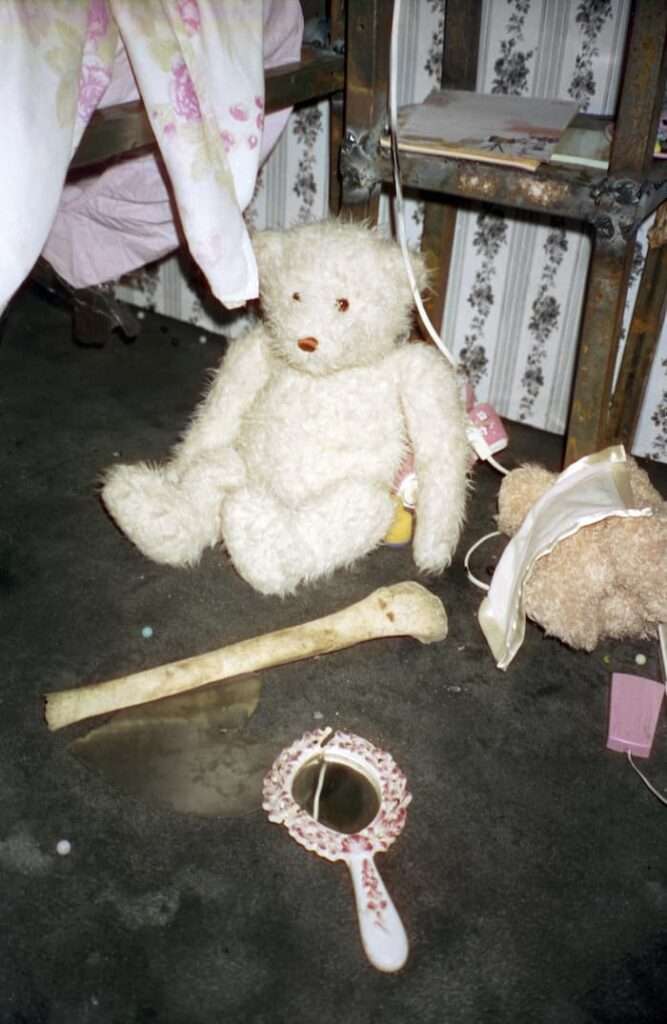
Art-o-rama 2026 Solveig Burkard Kids Return, 2021
Exhibition view, Decorama, L’Espace Voltaire, 2021.
Photo: Alexandre Ferreira. Courtesy of the artist and Pony, Montreuil.
Another major highlight is the 20th edition of Art-o-rama this year. Looking back, what stands out most from the journey so far?
Indeed, the first edition of Art-o-rama took place in 2007, nineteen years ago. Since then, we have increased the number of exhibitors tenfold—from just seven participants, including five galleries, in 2007, to seventy exhibitors last year, forty of which were galleries. Despite this growth, the fair has retained its intimate character and has reached a stable format over the past few years.
From the outset, Art-o-rama was conceived as a project designed to energise the local cultural landscape. We have always been deeply rooted in a regional ecosystem, which has itself expanded considerably over the years. At the same time, Marseille has become an increasingly attractive destination, welcoming more artists each year, as well as new galleries. In fact, a new gallery will open during this year’s edition of Art-o-rama.
The fair has evolved alongside the strengthening of cultural institutions and the emergence of new exhibition spaces, both public and private, in Marseille and throughout the surrounding region. Together, these developments have positioned the area as one of the leading destinations for international contemporary art.
The phenomenon of Arles, located less than an hour from Marseille, has also played a significant role, bringing together internationally renowned foundations and festivals. Beyond the forty or so cultural partners associated with Art-o-rama—many of them members of the Plein Sud network—we can also point to major destinations such as Château La Coste and Villa Carmignac.
Today, the region offers a remarkably diverse ecosystem, ranging from artist-run spaces to major private foundations. This creates an exceptionally rich and dynamic cultural fabric—arguably the most significant in France outside the Paris region, and perhaps even the leading contemporary art destination in the country during the summer season.
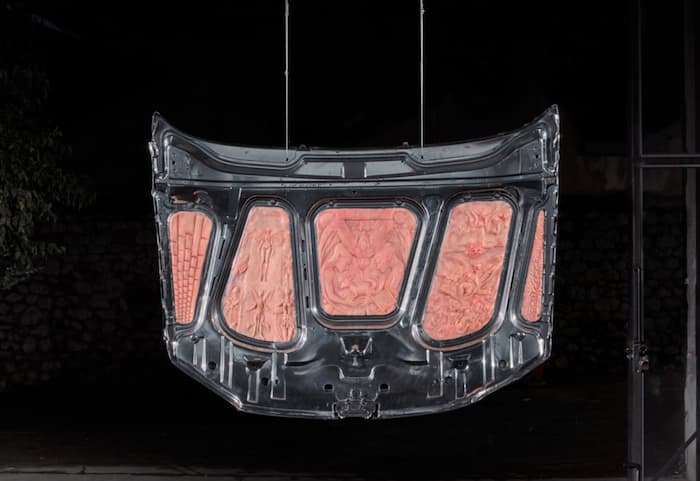
Art-o-rama 2026 Elvire Ménétrier, Age of mythology, 2025
Car hood, automotive paint, painted prosthetic SFX silicone bas-reliefs
140 x 100 cm
Courtesy of the artist and Spiaggia Libera
In terms of participation, has the profile of galleries evolved compared to previous editions?
From the very first edition, our positioning was to work with young galleries. Initially, this was partly a generational choice: we went to meet gallerists who were around our own age. At the time, in 2007, the contemporary art market in Marseille was relatively stagnant. The city was somewhat peripheral in relation to the broader art market, although this has since evolved.
It was difficult then to convince established galleries with high price ranges and significant overheads. Younger galleries, by contrast, tend to be more adaptable, more open to new projects, and in greater need of support and visibility. We were not in a position to offer much to well-established galleries, but we could support emerging ones through curatorial projects that would have been too costly to develop within a large fair context.
Focusing on emerging galleries therefore made sense given our environment. It has since become part of Art-o-rama’s identity, and we continue to feature a majority of new galleries. This year, more than half of the participating galleries were founded less than five years ago.
Even when we do host more established galleries, they often present younger artists and, in any case, recently produced works—sometimes even works created specifically for Art-o-rama.
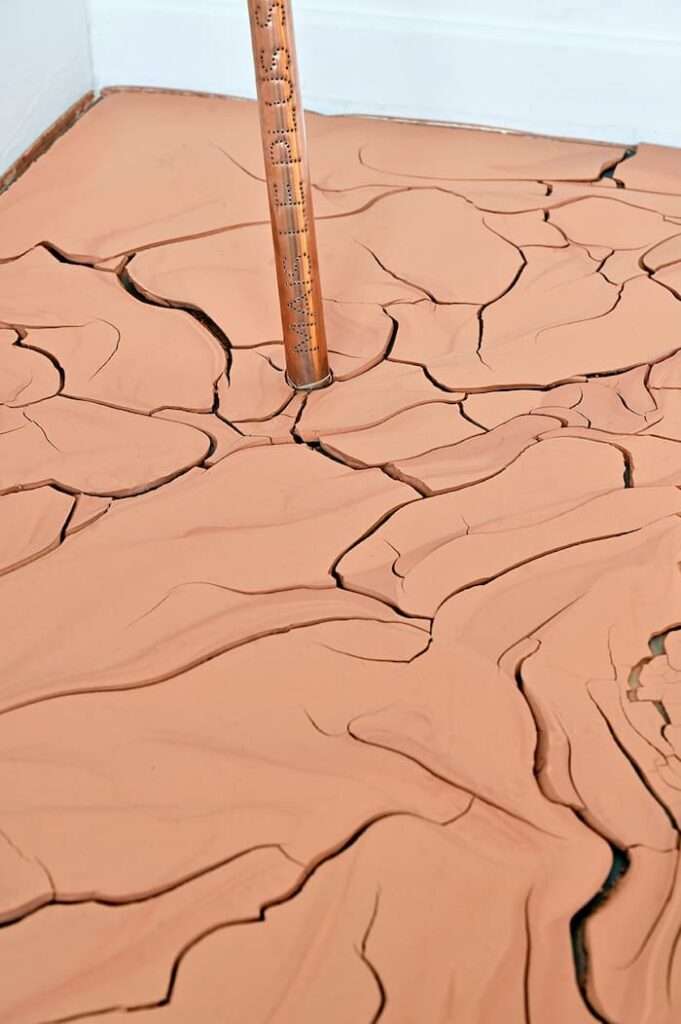
Clara Darasson. Julia Gault, Vague de chaleur courtesy the artist
How are new participations distributed compared to returning galleries?
For the past few years, we have maintained a 50% renewal rate among participating galleries. In the early years, the renewal rate was 100%. However, at that time we had very few galleries, and if we wanted visitors, collectors, and professionals to return, it was essential to continually offer new discoveries.
We have remained committed to this dynamic, which is also part of Art-o-rama’s identity. Those who come and return are also looking to encounter new galleries, discover new artists, and see recent works. In addition, we are recognised as a fair that presents curatorial projects. Galleries take advantage of this opportunity to present their artists in relation to their current programming and context. They may therefore skip a year or two before returning with a more specific, contextualised proposal.
For example, the Berlin gallery Dittrich & Schlechtriem will present this year a project by Lukas Städler, who will produce photographic works in Marseille this summer.
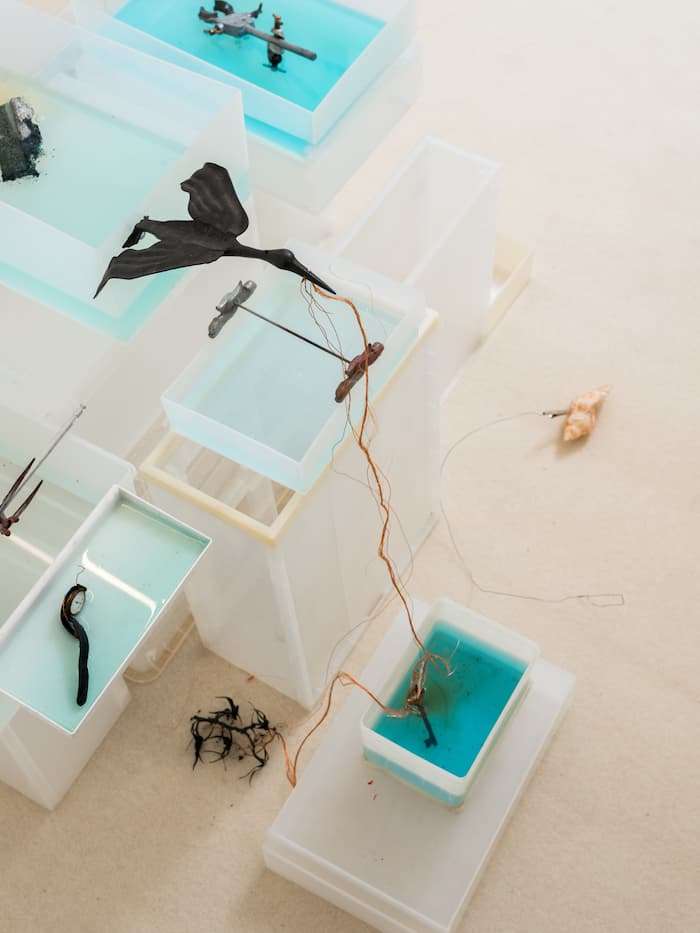
sissi club. Joshua Merchan Rodriguez, Panmetallism, 2025
What are the links with the Mediterranean Season?
Of course, we are part of the Season through the exhibition On the Ruins, Stones Bloom by Abdessamad El Montassir.
However, we did not seek to position Art-o-rama within this framework, even though, quite naturally—as is the case for La Friche and, more broadly, for Marseille—we maintain a strong focus on the Mediterranean basin. As every year, we host galleries coming from several countries in the region: in 2026, Italy, Spain, and Cyprus are represented.
That said, even if the Mediterranean is part of our regional context, we have always aimed to extend our reach beyond it.
Although we are not formally included in the Season, the entire programme of talks and screenings will nonetheless be shaped by Mediterranean perspectives. We will feature interventions that directly address this theme—for example, a film by Younès Ben Slimane, presented by Karima Célestin, which deals with his crossing, or a film by Ohan Breiding, presented by Mathilde Walker-Billaud, which follows the Rhône River down to its delta.
We will also take this opportunity to revisit Abdessamad’s exhibition, in particular his sound work created in collaboration with composer Matthieu Guillin.
The Mediterranean will therefore be present at Art-o-rama, and more broadly at La Friche, where, alongside our own exhibition, visitors will also be able to see Mona Benyamin, presented by Triangle-Astérides, and Zineb Sedira, shown directly by La Friche.
Participating galleries :
22,48 m², Romainville | aaaa nordhavn, Copenhague | Beige, Bruxelles* | Projets Bombon, Barcelone | Dépôt de câbles, Sofia | Chambre Chiquita, Barcelone | Clara Darrason, Paris* | Dilalica, Barcelone | DITTRICH & SCHLECHTRIEM, Berlin | Galerie Double V, Marseille | DS Galerie, Paris x Xxija Hii, Londres | Place de France, Milan* | Fuga, Barcelone* | Galerie Alegría, L’Hospitalet, Barcelone* | Galerie Maubert, Paris | GALERIE HAYASHI + ART BRIDGE, Tokyo* | Beau temps, Chicago/Little Rock/North Little Rock | Maison Chappaz, Barcelone* | In Situ – Fabienne Leclerc, Romainville | miłosc, Londres* | mueve (galería), Lima* | Galerie PM/AM, Londres* | Sabot, Cluj-Napoca x Galerie H’art, Bucarest* | Saison 4 Épisode 6, Londres x LAILA, Sydney* | Club Sissi, Marseille | Sophie Tappeiner, Vienne | Spiaggia Libera, Marseille x Galerie Punta, Sofia | Spiritvessel, Espinavessa* | TATSURO KISHIMOTO, Tokyo* | La Galerie du Pont, Paris* | GALERIE VELYCHKO, Paphos* | Fenêtre quatorze, Genève* | Zyrland Zoiropa, Berlin x The Horse, Dublin* éditions Atelier Arcay, Paris | Atelier Michael Woolworth, Paris* | Atelier Vis-à-Vis, Marseille | Éditions du Lavoir, Paris* | Keijiban, Kanazawa | Plus de projets, Paris | Pâme, Londres | Royal Book Lodge, Montreuil | TCHIKEBE, projet associé Marseille Pony, Montreuil* | artiste invitée 2026 Juliette George designer invitée 2026 Edda Rabold s how-room, prix région sud – commissaire d’art Pierre-Antoine Lalande | Maïssane Alibrahimi | Louise Belin | Nina Boughanim | Showroom Marine Pistien, prix région sud -commissaire d’exposition Justinien Tribillon | Emma Faury Graziani | Manon Garcia del Barrio | Andrea Moreno | Cassandre Thévenier
Practical Infos :
On the Ruins, Stones Bloom تزهر حجارة الأطلال
Abdessamad El Montassir
Friche la Belle de Mai
Until September 27
Art-o-rama 2026
Aug. 28-20