
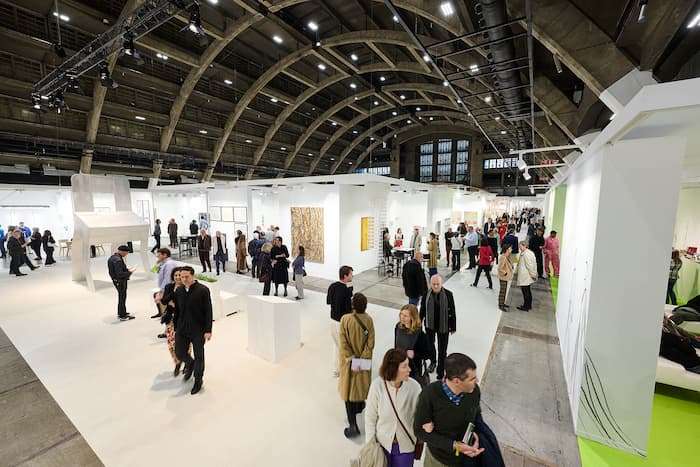
Art Brussels 2025 © David Plas
As Nele Verhaeren noted in a recent interview, one of the most highly anticipated highlights of the 42nd edition of Art Brussels is the new Horizons section, dedicated to XXL formats. Curated by Devrim Bayar who is also steering the future KANAL-Centre Pompidou as it finally begins to take shape, the initiative promises to expand both scale and perspective.
I first met Devrim at WIELS during the remarkable exhibition of Jacqueline de Jong, whose work fittingly reappears here among the seven monumental pieces selected for this ambitious program. She reflects on what Horizons represents in terms of new possibilities, particularly through its emphasis on women artists, while also highlighting the cosmopolitan and regional strengths that position Art Brussels within an increasingly globalized landscape.
She also shares a selection of her go-to galleries in the Belgian capital and offers a preview of upcoming milestones for the KANAL project, set to open on November 28 this year. Housed in the vast glass-and-steel structure of the former Citroën garage, spanning some 40,000 square meters, the venue will launch with around ten exhibitions and nearly 300 works on loan from the Centre Pompidou in Paris.
Devrim, who Paris audiences might remember for her curatorial work on ELLES x Paris Photo 2025, answered my questions.
Curator of the new “Horizons” section: what drew you to this proposal?
As an active figure on the Brussels art scene, it was important for me to contribute to the continued development of Art Brussels and to strengthen its appeal to a discerning and curious audience. What immediately interested me about the Horizons section is that it creates a dedicated platform for large-scale works, echoing initiatives such as Art Unlimited in Basel.
What I found particularly compelling was this desire to move beyond a market logic often centered on domestic-scale formats, and instead offer greater visibility to more ambitious proposals, both from artists and galleries. Horizons makes space for works that demand room to unfold, physically, but also conceptually and that invite a different way of looking.
In this sense, the section helps broaden the field of possibilities, supports artistic practices grounded in a certain generosity of scale, and offers audiences a renewed encounter with contemporary art.

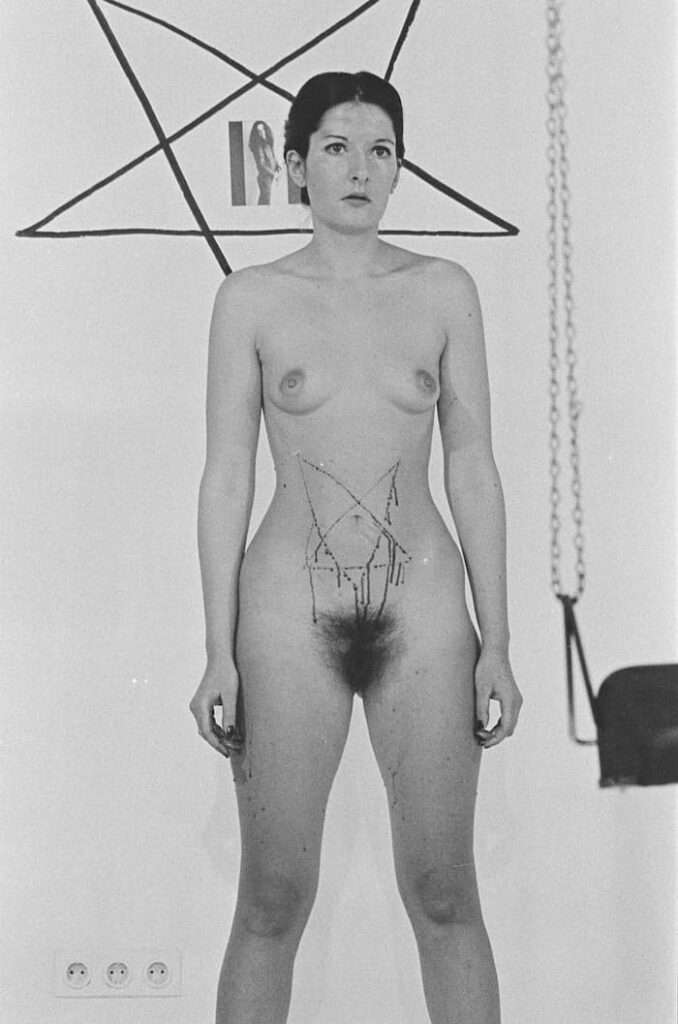
© Marina Abramović / Galerie Krinzinger
What kind of works are being highlighted?
The works presented in Horizons are remarkably diverse, both in terms of medium—painting, sculpture, design, tapestry—and in terms of the generations and origins of the artists. For this inaugural edition, I selected seven installations, the majority of which are by women artists.
Despite this heterogeneity, several resonances emerge across the proposals. A number of works engage in a dialogue around architectural motifs, which are reinterpreted and reimagined. Aglaia Konrad, for instance, reuses the elliptical windows of an iconic Brussels Brutalist building, the CBR Building. Meanwhile, Zuzanna Czebatul occupies the space with monumental inflatable columns, evoking both the codes of classical architecture and a kind of contemporary ruin. Pao Hui Kao, for her part, offers an immersive, almost meditative experience, constructing an entire spatial environment from delicate materials such as folded tracing paper, rice glue, and Urushi lacquer.
Other works, more directly pictorial, translate intense flows of thought and give form to inner states that can verge on chaos. This is the case with the historical work of Jacqueline de Jong, whose paintings on sailcloth unfold a vibrant energy, echoing the works on paper by Ymen Berhouma, where gestures, lines, and accumulations reflect a continuous mental movement. Finally, a work by Oswald Oberhuber, created in 1983 for the steirischer herbst and never shown again since, opens up a space that is both idyllic and imagined.

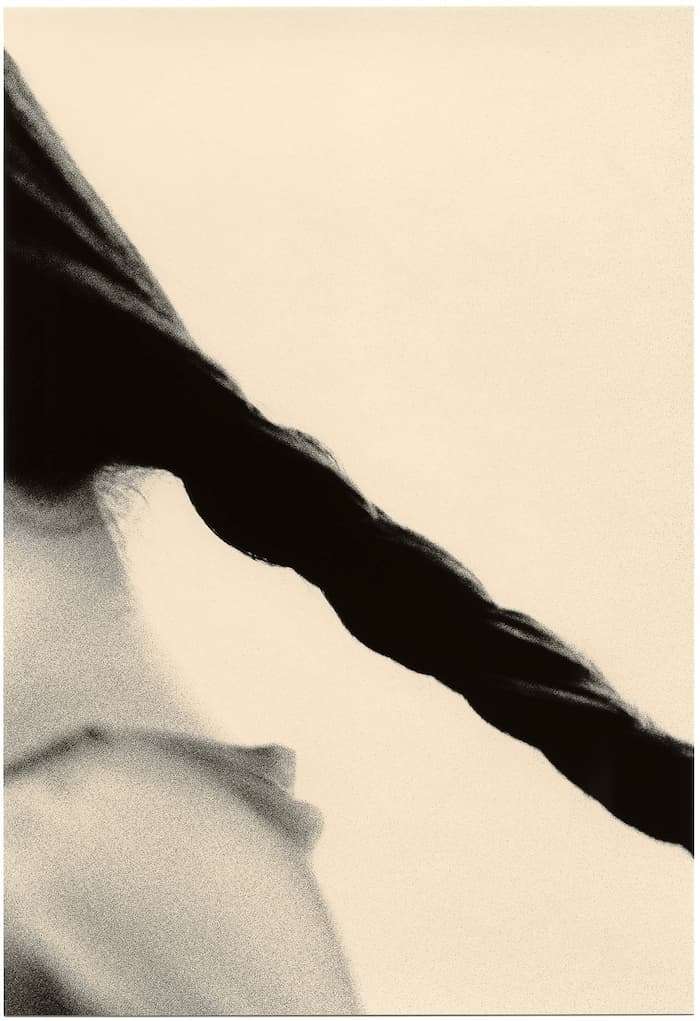
Untitled (braid), 2023.
© Mikael Siirilä / Courtesy Polka Galerie
What makes Art Brussels distinctive within the landscape of art fairs?
Art Brussels is firmly rooted in the European art scene, offering a compelling balance between local anchoring and international openness. The fair champions discovery and emerging talent, notably through sections such as Discoveryand the booth of the Fédération Wallonie-Bruxelles, while maintaining a consistently high level of curatorial and artistic standards.
It also stands out for its relatively accessible spirit—less intimidating, perhaps, than some of the major global art fairs—creating a more open and welcoming environment for both professionals and the wider public. Finally, it is deeply committed to building partnerships with local institutions, positioning itself as a key moment within the broader artistic ecosystem of the European capital.
Which galleries in Brussels do you follow ?
There are many, although I tend to prioritize visiting exhibitions outside of openings or dinner events, so I can take the time to properly engage with the proposals in the best possible conditions.
Among the spaces I follow particularly closely is Gauli Zitter, which opened just over two years ago and presents a programme often focused on young artists, with a strongly curatorial approach that sits somewhat outside a purely commercial logic—something I find very compelling. Likewise, Damian & the Love Guru supports primarily emerging artists, with remarkable energy despite more limited resources.
In the area around KANAL-Centre Pompidou, there are also several galleries I follow closely, such as Wouters Gallery, which notably presents the work of Ellen Braga in the Horizons section of Art Brussels, as well as Christophe Gaillard, dependance, and Greta Meert, all of which consistently present engaging and stimulating exhibitions.
Curator of the ELLE x Paris Photo 2025 parcours: what do you take away from this experience?
I very much enjoyed collaborating with Paris Photo. The artistic director, Anna Planas, invited me to curate a photography trail with a single guiding principle: bringing together women artists, or artists who identify as women. My selection was deliberately transgenerational, ranging from pioneering figures in photography such as Julia Margaret Cameron to younger artists like Sabiha Çimen.
Presented in the exceptional setting of the Grand Palais, the project benefited from outstanding visibility, thanks to a large and engaged audience as well as strong media coverage. We also published a catalogue that I find particularly successful. Above all, the team at Paris Photo was truly remarkable to work with.

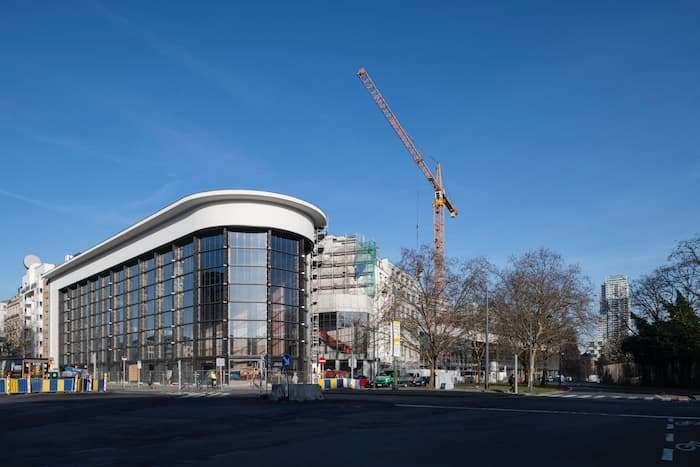
kanal- Centre Pompidou © Atelier Kanal
Senior Curator at KANAL-Centre Pompidou: what is your role ?
what are the next steps of the project?
As Senior Curator at KANAL-Centre Pompidou, I develop the exhibition programme in close collaboration with our Artistic Director Kasia Redzisz, while also overseeing a curatorial team of around eight people.
The next major milestone is, of course, the highly anticipated opening of the museum at the end of November. The programme has now been unveiled and is available on our website (www.kanal.brussels). We will open with around ten exhibitions, combining collection displays, large-scale commissions, thematic shows and monographic presentations. The programme is resolutely multidisciplinary, spanning artistic creation from the 20th and 21st centuries.
The coming months will be particularly intense: it will be the first time we fully occupy the new exhibition spaces, with an element of the unknown despite all the anticipatory work that has been carried out. Above all, we are eager to finally share the result of several years of work with the public.
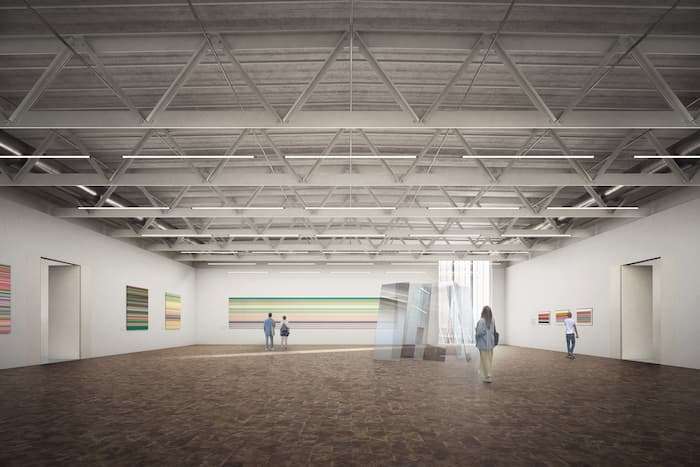
Atelier Kanal Kanal Top Floor Gallery a Friday late morning in February
What makes the Brussels art scene so attractive?
The Brussels art scene is particularly rich and dynamic. As a capital at the heart of Europe, it attracts many artists from neighbouring countries and beyond—whether to study in its numerous art, dance, or film schools, or to settle here after completing their studies. Brussels is a cosmopolitan city, yet it remains human in scale.
I am fortunate to travel frequently for my work, but I am always happy to come home. Brussels remains a comfortable city to live in on a daily basis compared to other European capitals, while still offering a cultural scene that is both highly stimulating and accessible.
It is precisely this balance between artistic vitality, diversity, and quality of life that makes it such a distinctive and attractive ecosystem today.
Practical Infos :
Art Brussels 2026
April, 23-26
Brussels Expo
Standard 20euros
Youth 10 euros
OPENING DAY
Thursday 23 April 2026
Preview | 11am – 4pm
Vernissage | 4pm – 9pm
PUBLIC DAYS
Friday 24 April 2026 | 11am – 7pm
Saturday 25 April 2026 | 11am – 7pm
Sunday 26 April 2026 | 11am – 6pm
In the City off program during the fair /
Organise your stay :
https://www.visit.brussels/fr/visiteurs